


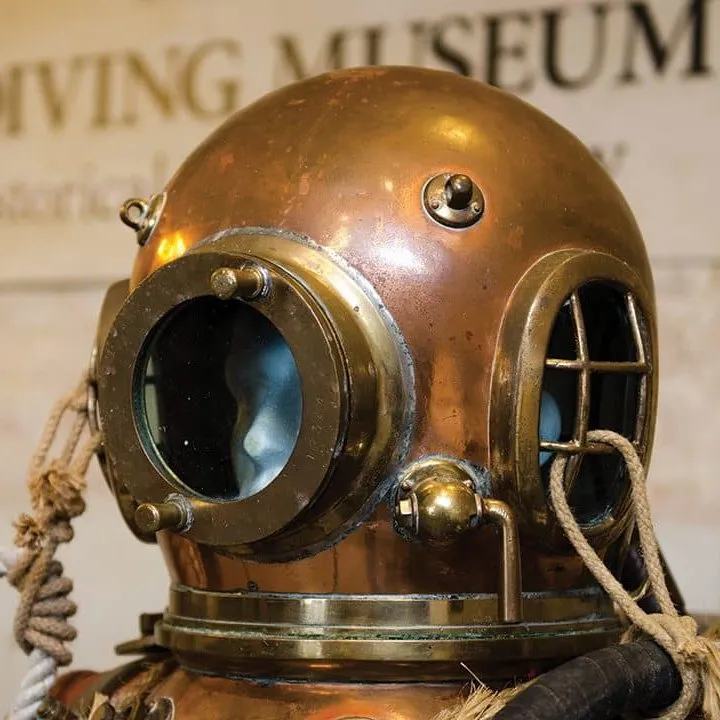
The exploration of the underwater environment is one of the most fascinating, yet extremely dangerous chapters in the history of human endeavour. For centuries, the depths have tempted engineers, treasure hunters, and brave individuals who decided to battle crushing pressure and eternal darkness. If you are looking for a place that perfectly captures this pioneering spirit, the Diving Museum Gosport is an absolute must-visit on your tourist map. Situated on the picturesque county coastline, right on the Solent with sweeping views of the Isle of Wight, it stands as a testament that this charming seaside town is the true, global cradle of the diving industry.
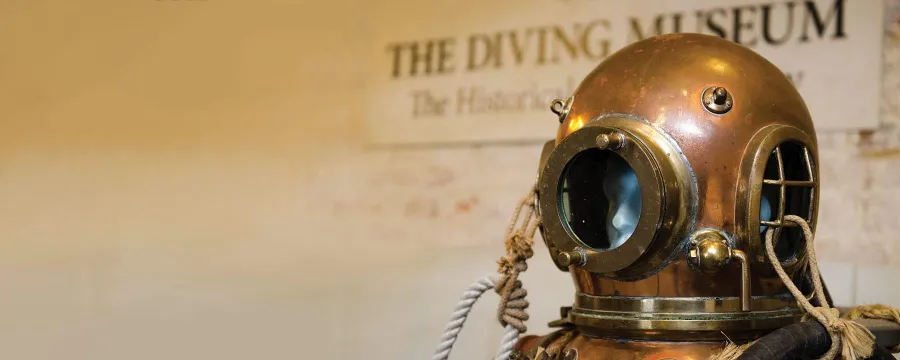
As one of the few institutions of its kind in the entire UK, the Diving Museum Gosport is comprehensively and exclusively dedicated to the evolution of underwater breathing apparatus across all its aspects: recreational, industrial, scientific, and military. When choosing the best Hampshire attractions, you simply cannot miss this gem, managed by the passionate volunteers of the Historical Diving Society. Prepare for a journey through the drama, heroism, and incredible innovations that forever changed our relationship with the ocean.
No. 2 Battery: A Fortress Turned Time Machine
To truly understand the phenomenon of the Diving Museum Gosport, one must look at the building that houses it. The museum’s premises are not just a neutral backdrop for the exhibits – they are actually one of the largest and most historically valuable artefacts in the entire collection. We are talking about the famous No. 2 Battery, located along the Stokes Bay Road promenade.
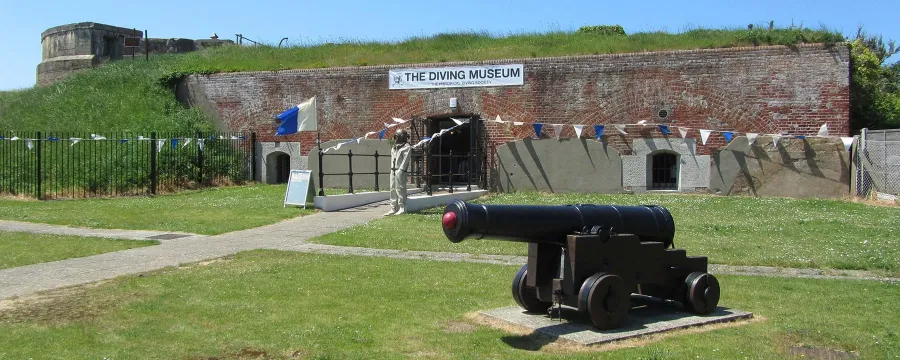
This structure, boasting prestigious Grade II* listed building status, was built in 1861 as part of a gigantic Victorian system of fortifications ordered by Lord Palmerston. Fearing a French naval invasion, the British Empire constructed massive structures out of early reinforced concrete and brick here to protect the strategic Royal Navy dockyard in nearby Portsmouth. Armed initially with 7-ton, 7-inch rifled muzzle-loaders on innovative Moncrieff carriages, and later with modern breech-loading guns, the battery commanded absolute respect.
Fascinatingly, this building underwent remarkable transformations in the 20th century, giving the Diving Museum Gosport its unique atmosphere. In 1933, the austere parade ground was converted into a civilian caravan park, only for the area to be requisitioned a decade later – during the Second World War – for the top-secret training of Duplex Drive (DD) amphibious tanks prior to the Normandy landings.
The most radical change, however, occurred during the Cold War. In 1982, the Victorian casemates were converted into a classified nuclear bunker and the Main Sub-Regional Headquarters for Civil Defence in the event of World War III. The gun ports were bricked up, and a Swiss air filtration system along with massive gas-tight blast doors were installed. Today, as you admire the exhibits, you are standing inside an archaic yet fascinating survival capsule designed for nuclear armageddon. From a military enthusiast’s perspective, this is undoubtedly one of the most compelling Hampshire attractions.
The Pioneers of Gosport: How the Deane Brothers Changed the World
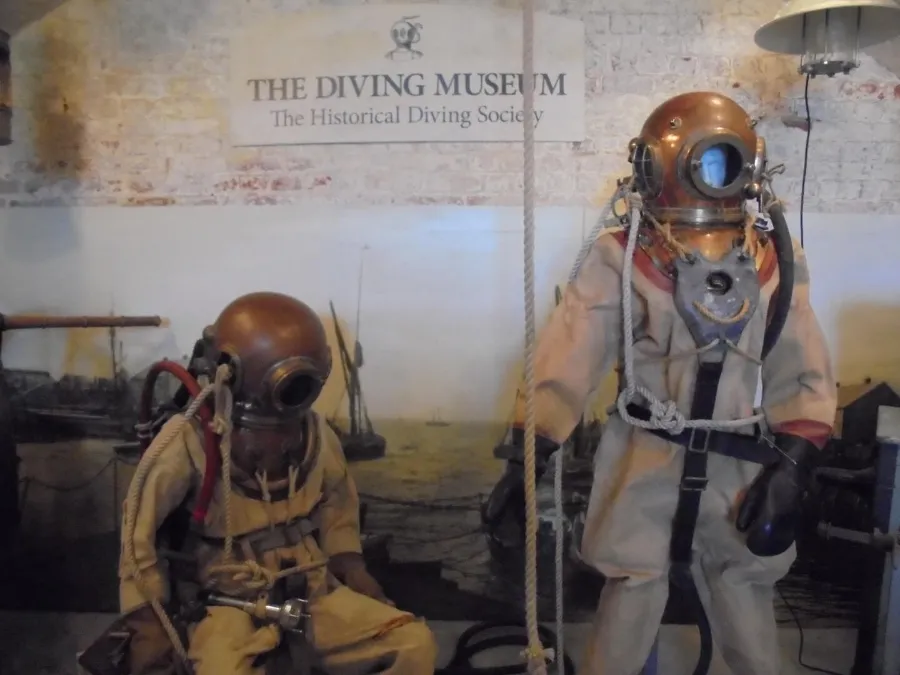
The modern, industrial history of diving begins not in the water, but… in the thick smoke of burning buildings. In 1823, Charles Deane patented a Victorian “smoke helmet” for firefighters. Soon, however, Charles and his brother John Deane realised that this copper marvel, supported by rudimentary air-pumping engines, would allow a person to breathe deep underwater.
The Deane brothers’ early inventions – “open” systems – were terrifyingly dangerous. If a diver simply tripped on the seabed, the life-giving air would escape from the bottom of the helmet, posing an immediate risk of drowning. Despite this, in 1829, the brothers conducted the first successful commercial operations off the coast of the Isle of Wight. Over time, collaborating with the brilliant engineer Augustus Siebe, they created a revolutionary “closed” system in 1837, where the helmet was sealed to a rubberised suit. This design defined the silhouette of a diver for the next 100 years!
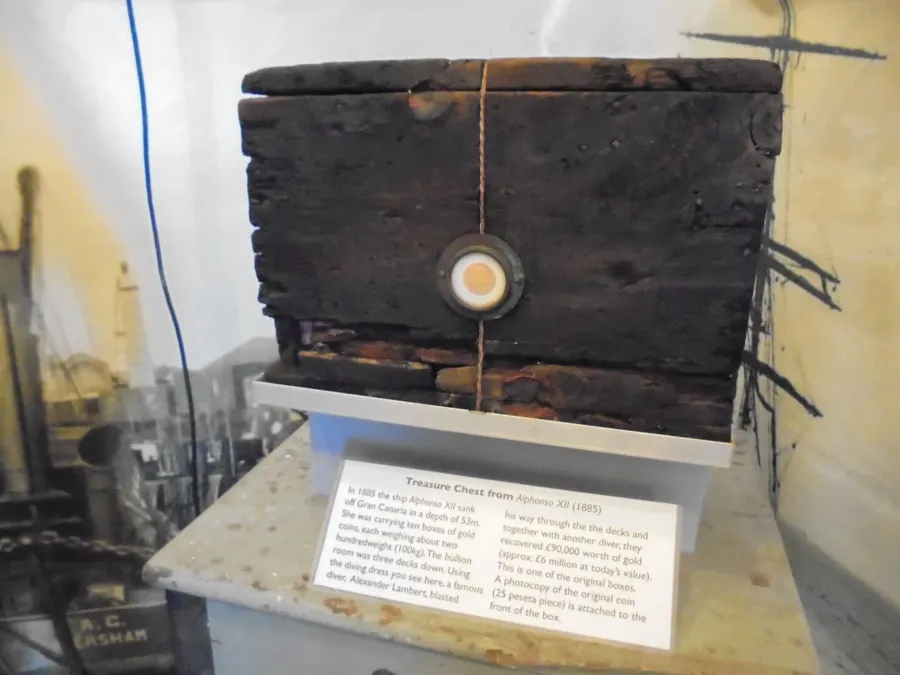
Gosport permanently entered the history books thanks to John Deane, who successfully surveyed the wreck of HMS Royal George in 1834, recovering massive cannons from it. Two years later, the brothers made an epochal discovery, finding Henry VIII’s flagship – the famous Mary Rose. They operated out of Gosport, and local entrepreneur Henry Abbinett became the first person in the world to commercially purchase his own diving helmet. If the rich history of diving interests you, the Diving Museum Gosport is the place where you will see firsthand the tremendous cost at which this discipline was born.
The Museum’s Collection: From the Holy Grail to James Bond’s Suits
The exhibits displayed within the casemates of No. 2 Battery are considered some of the rarest and most complete in Europe. By visiting the Diving Museum Gosport, you will be guided through a brutal and heroic timeline of engineering.
The undisputed “jewel in the crown” is the original, prototype Deane brothers’ helmet from 1828. Saved from the auction block, it has earned the legally protected status of a “national treasure.” Its crude appearance makes you realise the immense weight – reaching up to 75 kilograms – that the first explorers of the English Channel had to bear.
Deep-Sea Revolution and Pop Culture Icons
Genuine awe and respect are inspired by the phenomenal collection of atmospheric diving suits (ADS). These are armoured, one-person, human-shaped submarines built from alloys resistant to monstrous pressure. They allowed operators to work on the seabed in a one-atmosphere environment – eliminating the risk of decompression sickness or deadly nitrogen narcosis.
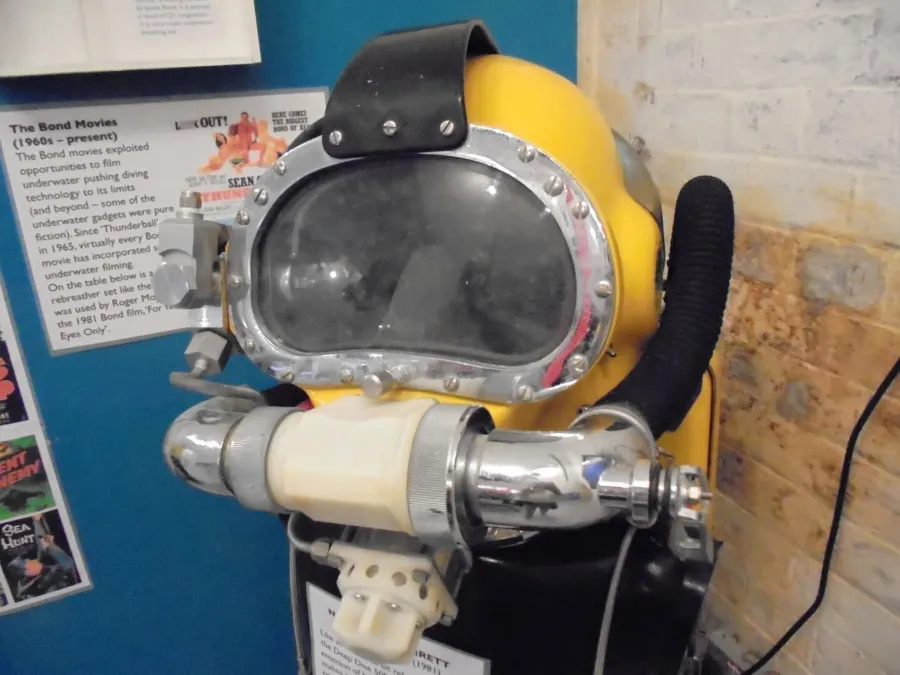
Among them stands out the iconic British “JIM” suit (model JIM 18), featuring fascinating rotary joints, on loan from the Royal Navy Submarine Museum. It gained massive popularity in mainstream pop culture, appearing in the famous James Bond film For Your Eyes Only (1981) as a tool for underwater combat. The presence of such iconic equipment attracts not only tech fans but also crowds of movie buffs looking for unusual trip inspirations and searching for unconventional Hampshire attractions.
The Birth of Recreational Diving
Another extensive section of the museum focuses on SCUBA gear, which freed humanity from heavy surface umbilicals. It is here that the history of diving intertwines with the fate of French naval officer Captain Jacques-Yves Cousteau, who, alongside engineer Émile Gagnan, created the first fully functional “Aqualung” in 1943. The museum proudly displays a classic tri-set apparatus, used on the legendary research vessel RV Calypso. What’s more, this apparatus has royal provenance – it was personally gifted by Cousteau to the Admiral of the Fleet, Lord Louis Mountbatten!
The Cold War and Espionage: The Disappearance of Commander Crabb
The military wing offered to visitors of the Diving Museum Gosport presents the darker side of the ocean: diving for the purposes of sabotage, mine clearance, and silent reconnaissance. Here you will learn about the mechanics of military rebreathers and see terrifying, manned “human torpedoes” known as Chariots.
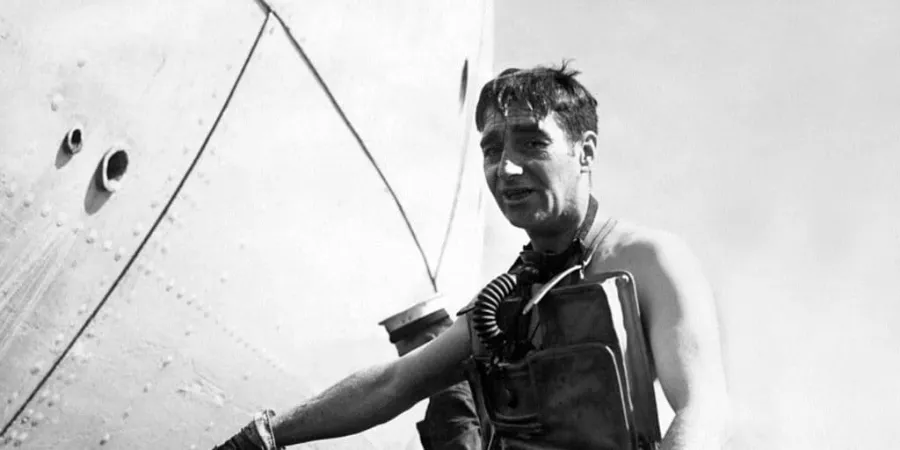
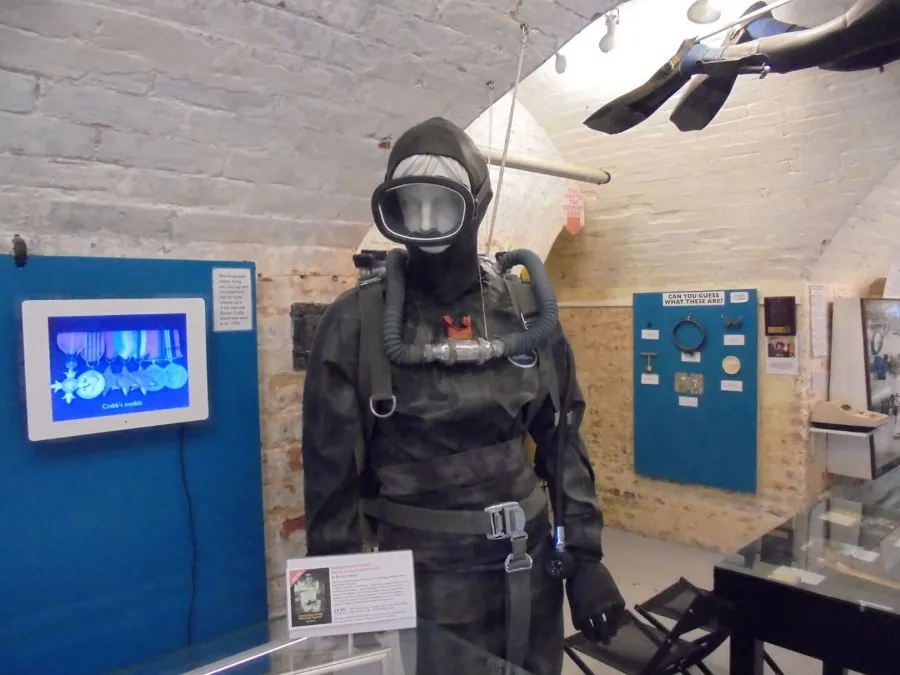
However, the greatest mystery exhibited within these cold walls is the unsolved 1956 case of Lionel “Buster” Crabb. This outstanding British diver, awarded the George Medal for disarming Italian mines during WWII, was secretly recruited by MI6 at the height of the Cold War. His objective was to inspect the keel of the state-of-the-art Soviet cruiser Sverdlov (“Ordzhonikidze”), which had arrived on a peaceful, propaganda mission in Portsmouth harbour with Nikita Khrushchev on board.
On April 19, 1956, Crabb went into the water and vanished without a trace. This incident sparked a massive diplomatic scandal that shook the government of British Prime Minister Sir Anthony Eden. The Soviet Union accused the British of blatant espionage, and the Admiralty panicked and covered up the affair, tearing pages from hotel registers in Portsmouth and issuing absurd, fabricated statements about an “unfortunate test-dive accident.”
Fourteen months later, a mutilated body missing its head and hands washed ashore near Chichester and was arbitrarily identified as Crabb’s remains – a decision that pathologists still object to today. Did he die of a heart attack in old gear? Was he murdered underwater by Soviet KGB snipers? Or perhaps – as rumours suggest – did he defect to the USSR? The full intelligence files will remain completely classified in national vaults until 2057. This fascinating story later inspired Ian Fleming to write the Bond novel Thunderball. Walking through the museum, you can see Crabb’s personal items: his knife, his dock worker’s cap, and watch recordings of his diving companion.
An Ordinary Hero: William Walker
The history of diving is not just about spies. During your tour, you will also learn about the fate of William Walker – a tough diver who attempted the impossible in 1906. The massive, 11th-century Winchester Cathedral had begun to dramatically sink into the boggy peat and was threatened with total collapse.
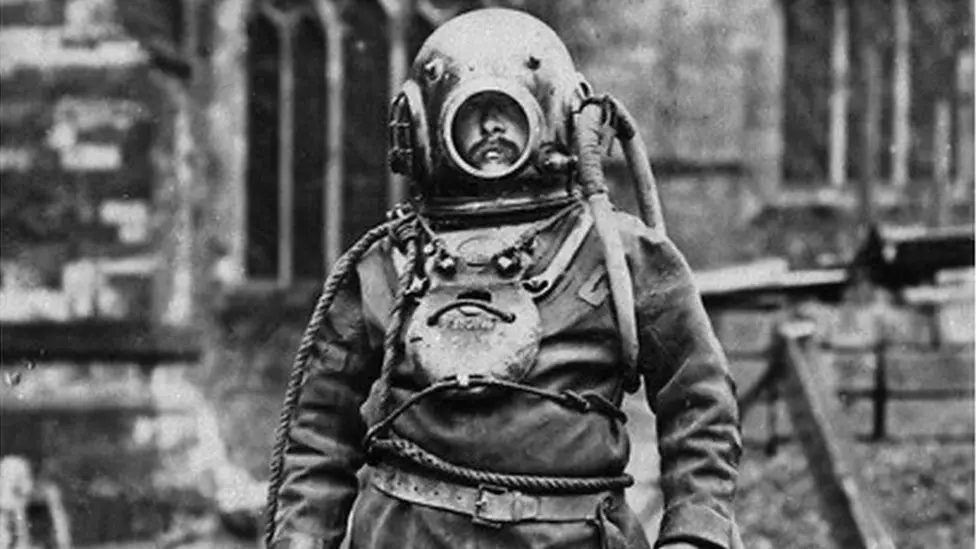
For 6 long years, working alone in pitch blackness and freezing water beneath the crypt floors, Walker manually laid thousands of bags of hardening concrete. It is estimated that he laid tons of them, recreating a stable foundation for the cathedral. Walker didn’t fight with weapons – he fought with a pickaxe and a trowel, wearing heavy leaden gear. He saved one of the most beautiful historic buildings in Europe. It is a beautiful tribute to the British working class and early engineering.
A Perfect Attraction for Everyone
When planning your trip and searching through guidebooks for the best Hampshire attractions, remember that the Diving Museum Gosport is exceptionally family-friendly. At the very end of the heavy, technical exhibition, a treat awaits the youngest visitors: the Mannequin Man. It’s an interactive, fun zone where you can put on a highly realistic replica of a heavy Victorian helmet, take a souvenir photo, and personally feel the weight that giants of the deep like William Walker or the Deane brothers had to struggle with.
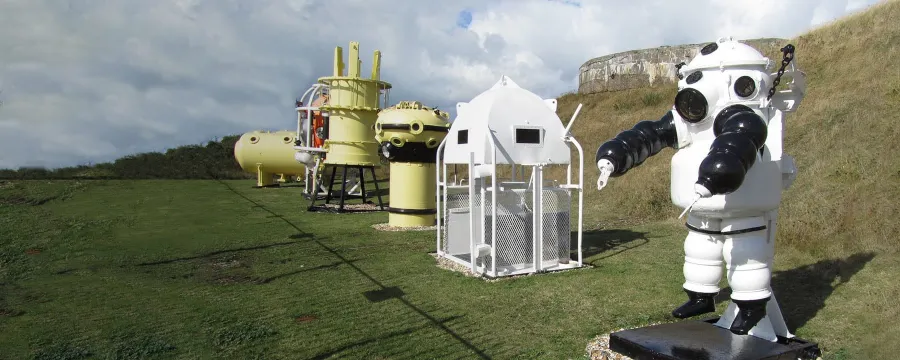
While you are there, be sure to admire the giant diving bells and steel decompression chambers outside the entrance, set against the backdrop of the 1861 brick ramparts. After leaving the museum, we highly recommend a stroll along the wide Stokes Bay promenade with an excellent view of the Isle of Wight, followed by a relaxing coffee at the nearby Bayside Cabin.
Don’t delay – add the Diving Museum Gosport to your itinerary. The depths and their mysteries are waiting just around the corner!