

Category: Guides & Tips

  • Incredible Portsmouth Museum: The Ultimate Visitor Guide

    Incredible Portsmouth Museum: The Ultimate Visitor Guide

    Portsmouth is an absolutely unique place on the map of Great Britain. Functioning in our geographical awareness as the only British city located entirely on an island (Portsea Island), it constitutes a fascinating cultural and urban phenomenon. If you are planning your stay and wondering where to begin your exploration, there is only one answer. Portsmouth Museum (Portsmouth Museum and Art Gallery) is the cultural lifeblood of the city and the perfect starting point for any tourist. This is where centuries of naval supremacy meet the dynamic transformations of the Victorian era, and the literary echoes of Britain’s greatest creators still resonate within historic walls.
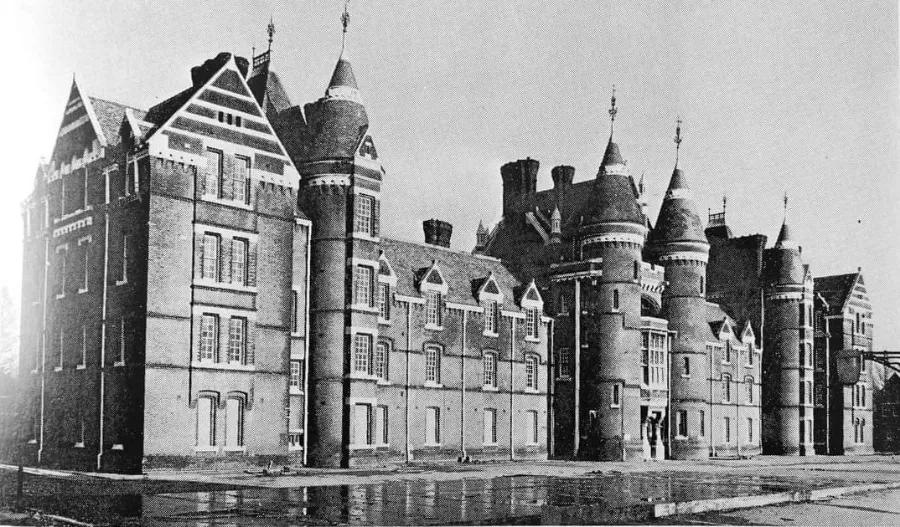
    Portsmouth Museum

    Located on Museum Road (postcode PO1 2LJ), this remarkable venue is not merely a dull warehouse of dusty artefacts. It is a dynamic and incredibly modern educational platform. For lovers of maritime tales, fans of detective mysteries, or families looking for smart entertainment, this is an absolute must-see. Moreover, keeping in line with a modern policy of inclusivity, this institution offers free access to its permanent galleries! Join us for an in-depth guide that will uncover the deepest secrets of this place.

    From Military Bastions to a Temple of Culture: The Fascinating History of Portsmouth

    Understanding the importance of the collections is impossible without knowing the fate of the building itself. The premises currently housing the Portsmouth Museum are a material witness to turbulent geopolitical transformations. The site has deep military roots dating back to the 17th century when the foundations of the local fortifications were shaped under the watchful eye of the eminent Dutch engineer, Bernard de Gomme.
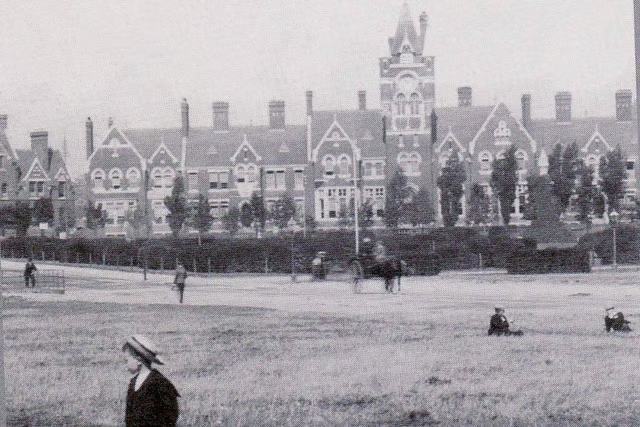
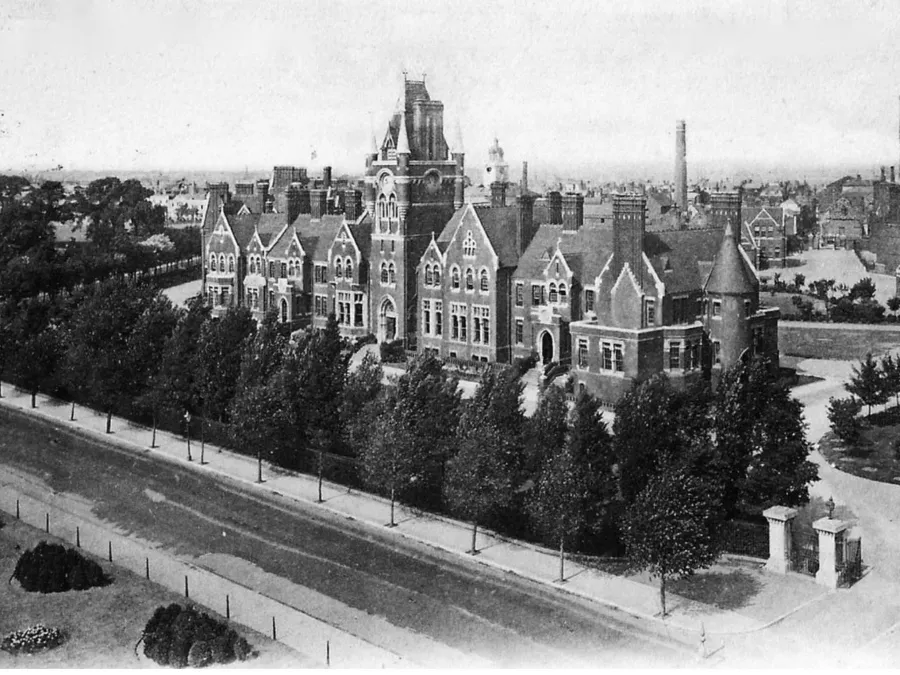
    Portsmouth Museum 1898

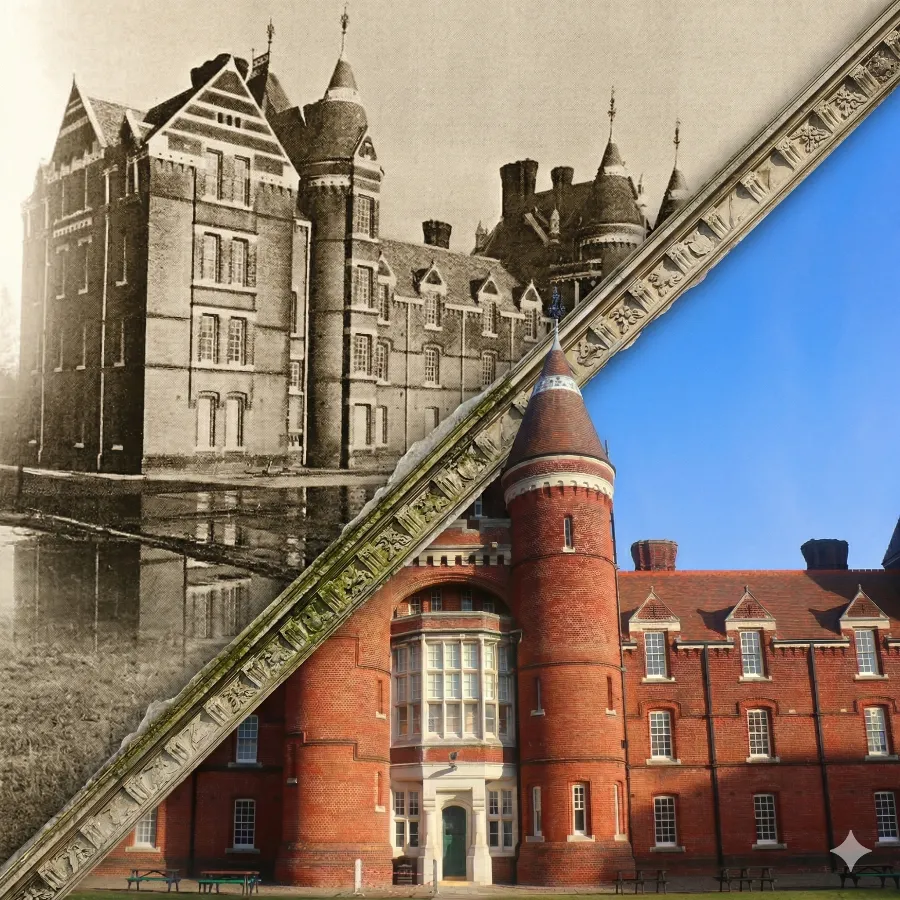
    The rich history of Portsmouth is literally carved into every stone here. In 1760, the Fourhouse Barracks were erected on this site (the name originated from four royal breweries supplying beer to the fleet). Then, in 1893, with the use of forced convict labour, impressive red-brick officers’ quarters were built – today’s museum building. An interesting fact is that the local working-class community, out of sheer pity, secretly fed the working prisoners sweets and tobacco. One of the convicts, carving intricate heraldic details, was treated so well that after his sentence had expired, he actually asked to stay on just so he could complete his artistic masterpiece!
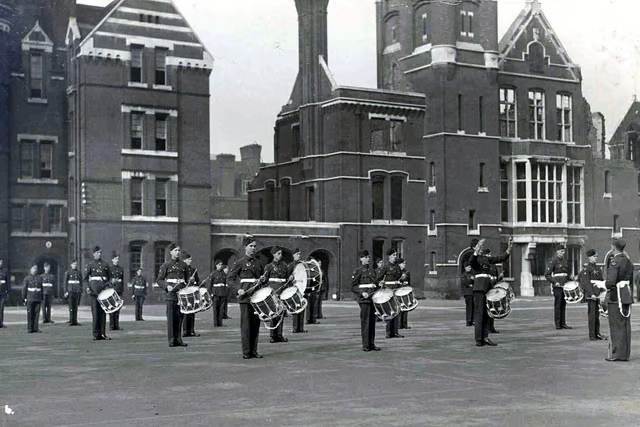
    Portsmouth Museum Victoria Barracks ruins

    We must also mention the tragedy of the Second World War. The original city museum was located on High Street. Anticipating the worst, the heroic staff evacuated the most valuable collections in 1940. This decision proved to be a lifesaver, as in March 1941, during a massive Luftwaffe bombing raid (known as the Portsmouth Blitz), the old building was reduced to absolute ruin. The treasures that survived the flames eventually found their magnificent new home in the surviving barracks in 1972.

    Time Travel: “Story of Portsmouth” and the Evolution of Daily Life

    One of the greatest reasons to visit the Portsmouth Museum is the absolutely phenomenal “Story of Portsmouth” exhibition. Forget about boring display cabinets. Here, the curators have opted for an immersive chronological narrative, creating advanced period rooms. It is a genuine time machine!
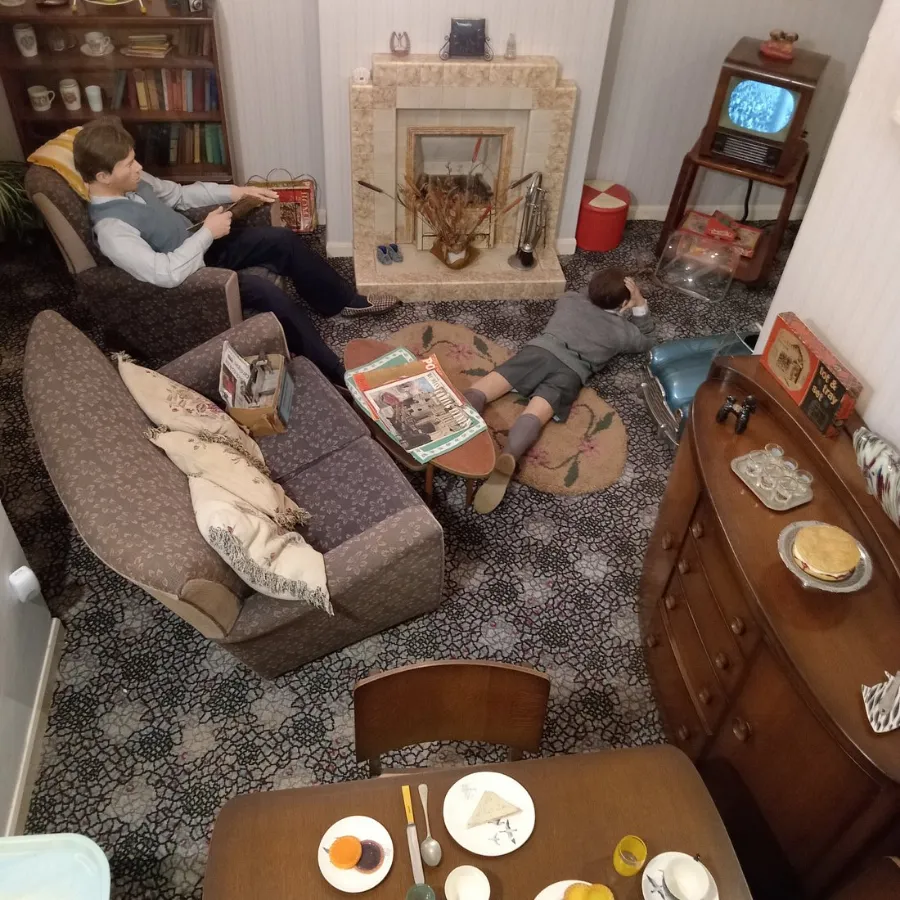
    Portsmouth Museum room '50s

    Your journey begins in an austere, 17th-century bedroom. You will quickly realise how dark and cold old households were, illuminated only by the faint glow of candles through small leaded window panes. Then, you will collide with the brutal reality of the industrial era in a reconstructed dockyard worker’s kitchen from 1871. This cramped and utilitarian space stands in stark contrast to the opulence of the Victorian parlour exhibited nearby, overloaded with trinkets and indicative of upper-middle-class status.
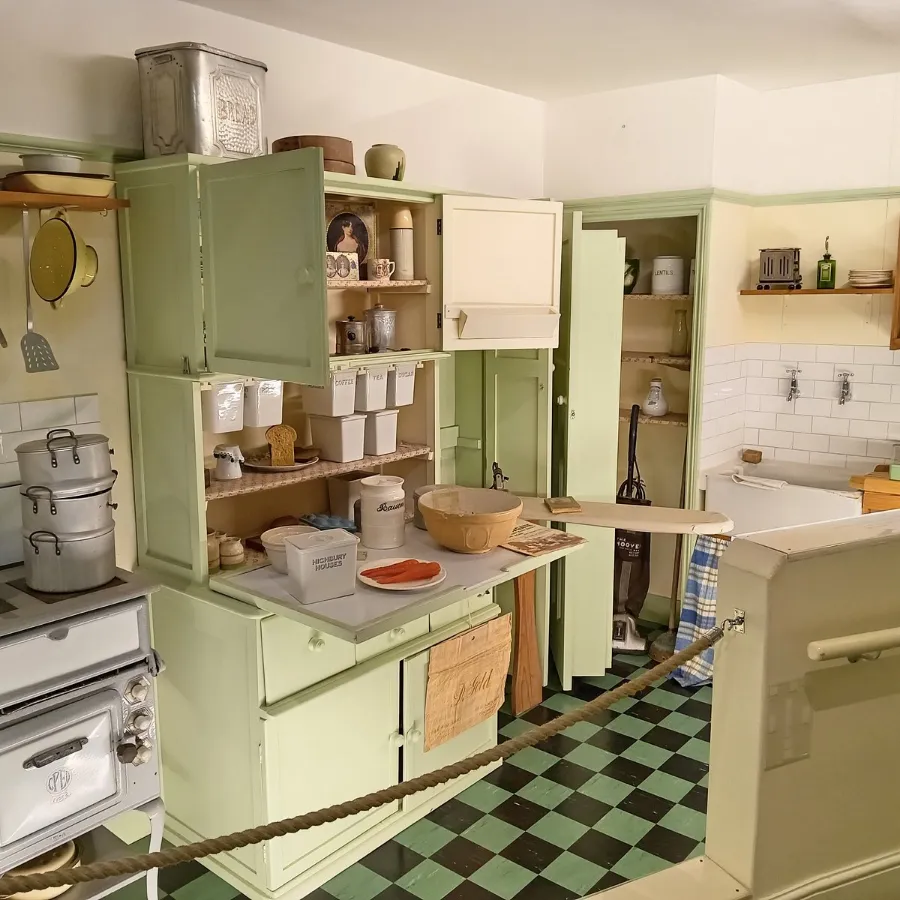
    Portsmouth Museum Kitchen 1871

    Subsequent rooms take you straight into the 20th century. You will see a fascinating 1930s dining room in an early glamour style, inspired by Hollywood culture, before finally landing in a loud, colourful 1950s living room, where the television set already takes centre stage. It is a real treat for enthusiasts of anthropology and interior design.

    Top Portsmouth Attractions: Sherlock Holmes and Spiritualism

    If you ask literary travellers about the top Portsmouth attractions, they will undoubtedly point to this museum because of one name: Arthur Conan Doyle. It was right here, in the Southsea district (specifically at Bush Villas), that the writer opened his medical practice in 1882. Because patients were scarce and bills had to be paid, the young doctor started writing short stories. That is how the most famous detective of all time was born!

    Portsmouth Museum Sherlock Holmes

    The Portsmouth Museum holds one of the world’s largest and most valuable private collections dedicated to Sherlock Holmes – The Arthur Conan Doyle Collection (the Richard Lancelyn Green Bequest from 2004). The collection, valued at over £3 million, includes 40,000 unique documents, alongside thousands of rare books and artefacts.

    The absolute “Holy Grail” of this collection is an immaculately preserved, completely intact copy of “Beeton’s Christmas Annual 1887”. It was in this very publication that the first Holmes novel, “A Study in Scarlet”, saw the light of day. There are only a dozen or so such complete copies left in the entire world! Due to its extreme fragility, this rarity is seldom displayed, but just the awareness of being in the presence of such a collection gives you goosebumps.

    The exhibition also sheds light on the author’s darker, controversial post-WWI interests – spiritualism. You will see, among other things, the original wooden memorial plaques from Sir Arthur’s grave, which were rejected by the church cemetery. The museum also provides interactive activity trails and detective puzzles that turn the whole experience into a fascinating field game for amateur sleuths!

    “Pompey”: The Island City, Fortress, and Temple of Football

    The tradition and unique local patriotism of the residents (who proudly refer to themselves as “Pompey”) is another pillar of the exhibition. Understanding how the history of Portsmouth shaped the tough, dockyard character of its people is the key to feeling the true vibe of this city. The city squeezed and expanded on a closed island, becoming one of the most heavily fortified places on earth, where civilians lived in the shadow of cannons.
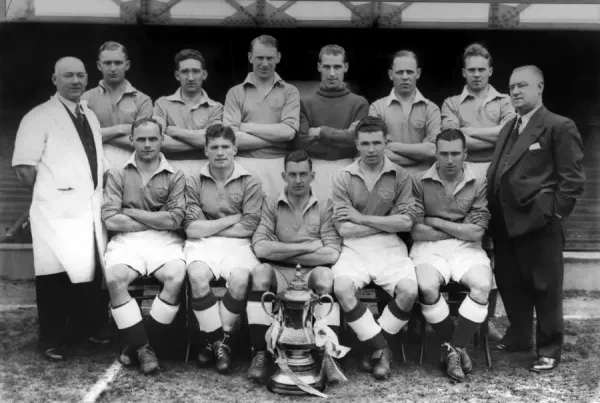
    Portsmouth Museum FA Cup 1939

    For the working-class society, sport was an escape from the hardships of dockyard life. The museum houses a fantastic gallery called “Football in the City”. For Portsmouth FC fans, this is a place of worship. You can see the original footballs from the 1939 and 2008 FA Cup finals. However, the greatest emotions are stirred by an old, authentic cast-iron turnstile from Fratton Park stadium. The clatter of its mechanism is a sensory childhood memory for generations of residents and the “gateway to the magical world of football”. (Practical note: the second floor housing this exhibition strictly closes at 4:30 PM!).

    Literary Echoes: Jane Austen in Paintings

    Although Sherlock Holmes plays the first fiddle here, a keen observer will notice wonderful references to the works of Jane Austen, who lived in Portsmouth between 1806 and 1809. The famous author’s brothers were distinguished Royal Navy officers. Austen utilised their knowledge while writing novels such as “Mansfield Park”.
    Portsmouth Museum Old Photo

    The Portsmouth Museum offers a free, intimate “Picture Gallery” filled with 19th-century dockyard and maritime landscapes. Looking at the canvases depicting the intricate rigging of ships moored at Spithead or the chaos of the early arms industry, a tourist can see the world through exactly the same eyes as Fanny Price, the heroine of “Mansfield Park”.

    A “Cabinet of Curiosities” and Incredible Design

    The fine and decorative art collections in this venue could put many a capital city gallery to shame. Here, you will discover wonderful Portsmouth attractions in the form of outstanding avant-garde art and Victorian craftsmanship. Of particular note is the giant, octagonal oak table designed by the father of British Gothic Revival, A.W.N. Pugin, and hand-painted furniture by the famous artistic Bloomsbury Group (including an extravagant cabinet by Duncan Grant).

    Do not miss the gems recommended by the museum staff as part of the “Staff Recommends” programme. Among them, you will find:

    • The Silver Porcupine: a bizarre, 18th-century toothpick holder from the naval hospital, rescued from the burning Guildhall in 1941!
    • A Model of a Disappearing Gun from 1870: a marvel of ballistic engineering.
    • Pedlar Dolls: fascinating Victorian conversation pieces from 1840.
    • The Skeleton of a Mole and a Flightless Kiwi Bird: fascinating osteological exhibits proving evolutionary theses.

    How to Plan Your Visit? A Practical Guide

    To fully harness the potential of this place, it is worth knowing a few operational details. This will make any trip much easier.

    • Location and Travel: The venue is located on Museum Road. You can walk here from Portsmouth & Southsea railway station in just 15 minutes. It is also excellently served by bus routes 3, 700, and 23.
    • Opening Hours: The Portsmouth Museum is open from Tuesday to Sunday, between 10:00 AM and 5:00 PM (remember that the football exhibition floor closes earlier, at 4:30 PM!).
    • Parking: This is a massive advantage in a densely built-up city! At the rear of the building, there is a completely free car park for visitors (locked when the museum closes).
    • Food and Drink: Inside, there is a charming café offering special discounts during the first hour of opening. In the summer season, it is mandatory to visit the beautiful gardens with a hidden playground and free outdoor games to borrow.
    • Accessibility for Everyone: The historic Victorian building has been rigorously modernised. It features lifts, levelling ramps, Evac+Chair evacuation equipment, and the place itself is incredibly friendly to families with young children and breastfeeding mothers.

    The history of Portsmouth is a tale of naval power, hard graft, literary genius, and immense courage. A visit to the Portsmouth Museum and Art Gallery is not just a walk amongst exhibits; it is a deep and thrilling experience of the identity of Great Britain’s truest maritime heart. We strongly recommend adding this spot as the number one item on your tourist itinerary!

    Frequently Asked Questions (FAQ)

  • Incredible Portsmouth Historic Dockyard: Ultimate Guide

    Incredible Portsmouth Historic Dockyard: Ultimate Guide

    Great Britain has been inextricably linked to the sea for centuries, and nowhere is this relationship more tangible than on the south coast of England. Portsmouth Historic Dockyard is undoubtedly the beating heart of British naval history. This is not just an ordinary museum; it is a vibrant complex where the past intertwines with the present, and the scent of sea salt mixes with the aroma of aged timber and tar. If you are planning a visit to the south of England, this destination should be at the very top of your itinerary. In this comprehensive guide, we will tell you why it is worth visiting, how to plan your day, and exactly what to see to fully experience the historical glory of the Royal Navy.

    Why is Portsmouth Historic Dockyard a must-visit?

    When considering the best things to do in Portsmouth, the Historic Dockyard always takes centre stage. While a significant portion of the modern Royal Navy fleet is stationed here, it is the historical section open to tourists that attracts hundreds of thousands of visitors from all over the world every year. Portsmouth Historic Dockyard is a place where you can witness the evolution of naval engineering firsthand – from wooden sailing ships of the Tudor era, through mighty ships of the line from the Napoleonic wars, to the steel colossuses of the Industrial Revolution.

    A visit here is a genuine journey back in time. Walking along the cobbled alleys of the dockyard, past historic dry docks and red-brick storehouses, it is easy to imagine the hustle and bustle of thousands of workers, sailors, and officers who spent centuries building the might of the British Empire. It is a space that educates, inspires, and prompts reflection on the harsh realities of life at sea.

    The Crown Jewel: The legendary HMS Victory

    You simply cannot visit this site without seeing its biggest star. HMS Victory is the most famous warship in the world and the pride of the British Royal Navy. Built in the 18th century, she took part in numerous campaigns, but went down in history primarily as Vice-Admiral Horatio Nelson’s flagship during the victorious, yet tragically fatal for the commander himself, Battle of Trafalgar in 1805.

    Historic Dockyard

    Stepping aboard HMS Victory, the authenticity of the vessel is striking. Thanks to conservation work that has been ongoing for decades, the ship looks exactly as it did on the day of the famous battle. As you explore the various decks, you have to keep your head low – the ceilings are incredibly low, giving a stark impression of the difficult conditions in which over 800 crew members lived and fought.

    The guides passionately recount stories of the sailors’ daily lives, their diet consisting of hardtack and salted beef, and the grim realities of naval medicine at the time. The climax of the tour aboard HMS Victory is descending to the lowest deck to see the exact spot where Vice-Admiral Nelson drew his final breath. It is a profoundly moving experience that stays in the memory for a long time. Interestingly, despite the passage of over two centuries, HMS Victory remains in active service as the flagship of the First Sea Lord, making her the oldest commissioned warship in the world.

    The Mary Rose: A Tudor Time Capsule

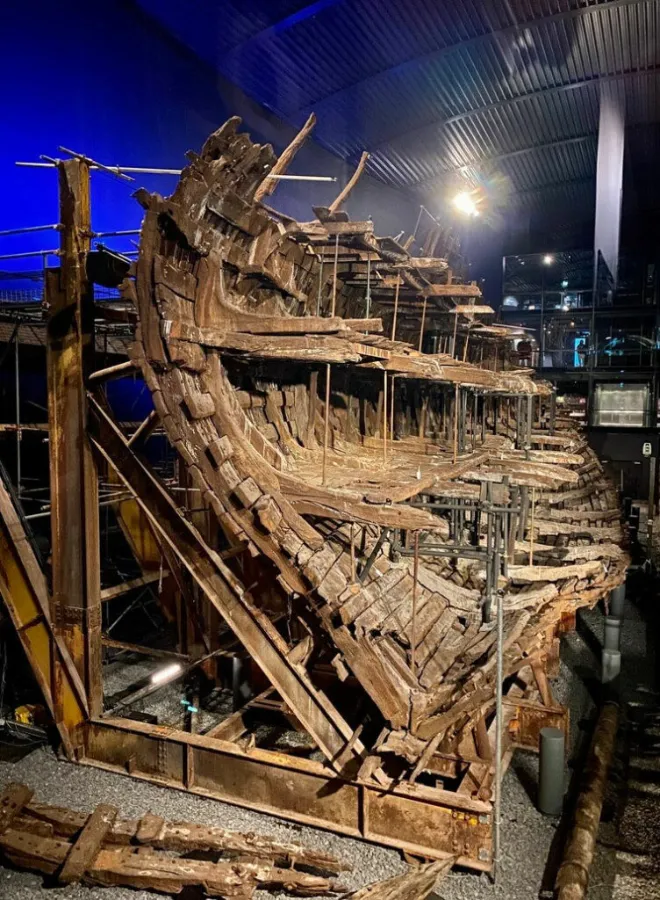
    Another reason why Portsmouth Historic Dockyard enjoys such immense prestige is the breathtaking Mary Rose museum. The history of this ship is as fascinating as it is tragic. Built during the reign of King Henry VIII, the Mary Rose was one of the first warships equipped with heavy broadside artillery. She sank in 1545 in the Solent, just a few miles from the harbour, right before the king’s eyes while repelling a French fleet attack.

    Historic Dockyard

    For over 400 years, the ship lay on the seabed, buried in silt, which paradoxically saved her from complete destruction. In 1982, in what remains one of the most complex underwater archaeology projects in history, the wreck was raised to the surface.

    Today, the Mary Rose Museum, located within Portsmouth Historic Dockyard, is an architectural masterpiece. Built directly around the reconstructed hull, it allows visitors to admire the remains of the ship from multiple perspectives and levels. However, it is not just the ship itself that makes the biggest impression, but the over 19,000 artefacts recovered from the seabed. They act as a unique “time capsule”, offering an unprecedented insight into the lives of Tudor-era people. You will see everything here – from massive cannons and longbows to the personal belongings of the sailors: leather shoes, nit combs, musical instruments, and even the remains of the ship’s dog, Hatch. It is an absolute world-class rarity.

    HMS Warrior 1860: A Marvel of the Industrial Revolution

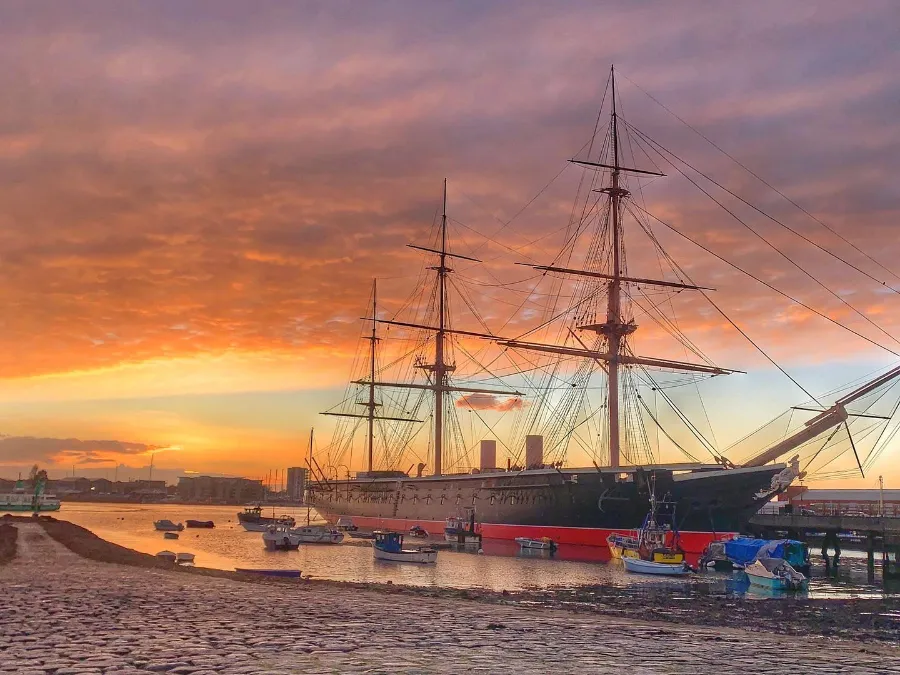
    The evolution of the British fleet did not stop at sailing ships. While exploring Portsmouth Historic Dockyard, your attention will certainly be drawn to the massive, black hull of HMS Warrior. Launched in 1860, she was Britain’s first iron-hulled, armoured warship, powered by both steam and sail.

    Historic Dockyard

    At the time of her creation, HMS Warrior was so technologically advanced, fast, and heavily armed that she instantly rendered every other naval fleet in the world obsolete. She never actually had to fire a shot in anger – her mere presence on the seas acted as a sufficient deterrent. Walking along her wide, gleaming decks, you can feel the stark contrast between the cramped quarters of HMS Victory and the spaciousness and Victorian splendour of Warrior. Here you will see elegant officers’ cabins, a gleaming engine room, and an impressive array of weaponry.

    HMS M33 and Action Stations: Attractions for Everyone

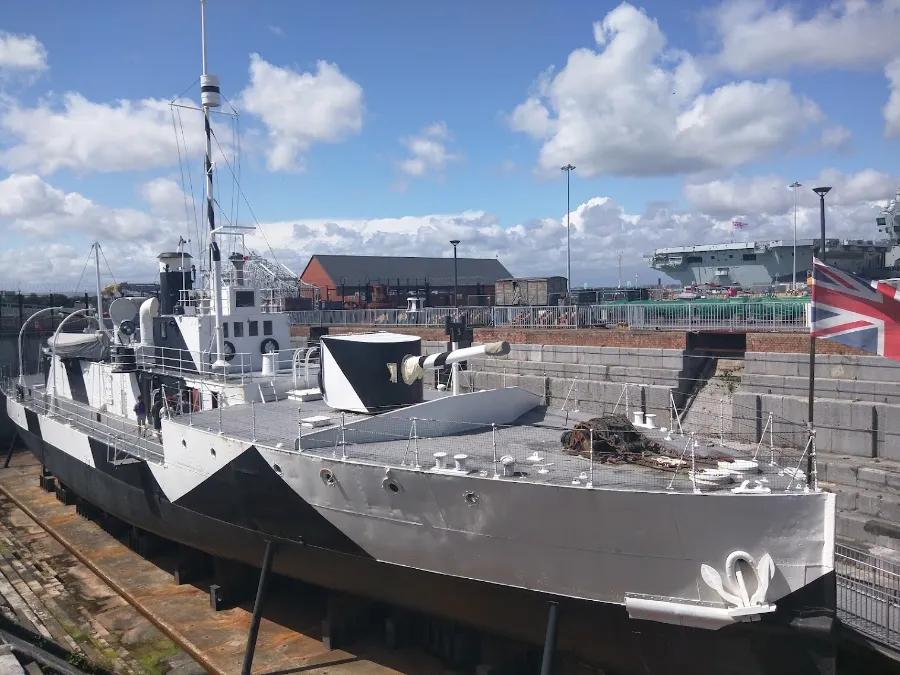
    Portsmouth Historic Dockyard offers much more than just the big three famous ships. For enthusiasts of 20th-century history, a must-see is HMS M33 – one of only three surviving British warships from the First World War. This small monitor took part in the bloody Gallipoli campaign in 1915. Exploring her provides a unique perspective on the living conditions of sailors during the Great War.

    Historic Dockyard

    If you are visiting the dockyard with children, be sure to head over to “Action Stations”. This is a huge, interactive arena inside the historic Boathouse No. 6. You will find flight simulators, climbing walls, laser quests, and dozens of physical challenges that test agility, dexterity, and strength – just like during Royal Marines training. It is excellent entertainment that perfectly balances a dose of historical knowledge with brilliant physical fun.

    One must also not forget the National Museum of the Royal Navy, located on the same site. Its extensive exhibitions will take you through hundreds of years of naval history, from the days of pirates to modern armed conflicts.

    Harbour Tours

    To fully appreciate the strategic importance of Portsmouth, you must view it from the water. A 45-minute Harbour Tour is usually included in the price of your Portsmouth Historic Dockyard ticket. This is a perfect opportunity to relax, have a coffee on the deck of the tour boat, and listen to the guide’s commentary. From the water, you can admire not only the historical part of the dockyard but also the modern warships of the Royal Navy – the impressive Type 45 destroyers and, if you are lucky, the newest Queen Elizabeth-class aircraft carriers. It is a fascinating contrast that highlights the continuity of naval tradition in this location.

    Practical Information for Planning Your Visit

    Planning your trip is straightforward, but it is worth knowing a few details to maximise your time.

    Which tickets should you choose?

    By far the most cost-effective option is purchasing the “Ultimate Explorer Ticket”. Although it might seem pricey at first glance, it provides unlimited access to all main attractions (including the Mary Rose, HMS Victory, HMS Warrior, the Harbour Tour, and the submarine museum in nearby Gosport) for a full 12 months! If you plan to explore other things to do in Portsmouth and stay in the Hampshire region for longer, this ticket allows you to spread your sightseeing over several days without rushing.

    How much time do you need?

    To do justice to everything the dockyard has to offer, you should set aside a full day (a minimum of 6-7 hours). Just touring the flagship vessels takes about 3 hours, and the Mary Rose Museum requires another 2 hours. A quick, few-hour trip means you will miss out on many fascinating details.

    Food and rest within the dockyard

    Wandering the decks of historic ships can certainly work up an appetite. You will find several places to eat well within the complex. The “Boathouse No.4 Restaurant” offers excellent meals with a view of the boatbuilding workshop, where traditional wooden boats are still restored today. Alternatively, “Costa Coffee” or the small cafés in the Mary Rose Museum are perfect spots for a quick coffee and a cake. It is also worth remembering that the dockyard is situated right next to the modern Gunwharf Quays complex. After the museum gates close (usually at 5:00 PM or 5:30 PM in the summer season), you can head there for dinner at one of dozens of superb restaurants with a view of the famous Spinnaker Tower.

    Getting there and location

    The dockyard boasts excellent transport links. The “Portsmouth Harbour” railway station is literally a 2-minute walk from the main entrance. This is an ideal solution if you are travelling from London or other cities in southern England. For those driving, the large “Havens Street” car park is available, though during the summer season, it is advisable to arrive early in the morning to guarantee a space.

    Other things to do in Portsmouth: What to see outside the dockyard?

    While the dockyard will take up most of your day, remember that things to do in Portsmouth do not end there. The city has plenty of fantastic venues to offer. The aforementioned Gunwharf Quays shopping and leisure centre is a paradise for bargain hunters seeking designer outlets. Another mandatory stop is taking the high-speed lift to the top of the Spinnaker Tower – a 170-metre observation tower offering breathtaking panoramic views of Portsea Island, the Solent, and the Isle of Wight.

    History buffs can continue their walk along the seafront to Southsea Castle, built by order of Henry VIII, or visit the deeply moving museum dedicated to the Normandy landings – The D-Day Story. Portsmouth is a vibrant city, full of lively pubs serving local craft beer and wide, shingle beaches perfect for an evening stroll.

    Summary

    Portsmouth Historic Dockyard is much more than a collection of old ships. It is a profoundly moving history lesson, a place where Great Britain’s national pride was forged in wood and steel. From the tangible evidence of heroism offered by HMS Victory, to the everyday life of Tudor people encapsulated in the wreck of the Mary Rose – the dockyard provides an extraordinary journey into the past for guests of all ages.

    Whether you are a keen historian, looking for a great educational adventure for your children, or simply want to explore the best things to do in Portsmouth, the Historic Dockyard is sure to meet and even exceed your expectations. Plan your visit, put on comfortable shoes, and prepare to step into the fascinating world of naval legends!

    Portsmouth Historic Dockyard – FAQ (Frequently Asked Questions)

  • The Incredible Diving Museum Gosport: Discover the Deep

    The Incredible Diving Museum Gosport: Discover the Deep

    The exploration of the underwater environment is one of the most fascinating, yet extremely dangerous chapters in the history of human endeavour. For centuries, the depths have tempted engineers, treasure hunters, and brave individuals who decided to battle crushing pressure and eternal darkness. If you are looking for a place that perfectly captures this pioneering spirit, the Diving Museum Gosport is an absolute must-visit on your tourist map. Situated on the picturesque county coastline, right on the Solent with sweeping views of the Isle of Wight, it stands as a testament that this charming seaside town is the true, global cradle of the diving industry.

    Diving Museum Gosport

    As one of the few institutions of its kind in the entire UK, the Diving Museum Gosport is comprehensively and exclusively dedicated to the evolution of underwater breathing apparatus across all its aspects: recreational, industrial, scientific, and military. When choosing the best Hampshire attractions, you simply cannot miss this gem, managed by the passionate volunteers of the Historical Diving Society. Prepare for a journey through the drama, heroism, and incredible innovations that forever changed our relationship with the ocean.

    No. 2 Battery: A Fortress Turned Time Machine

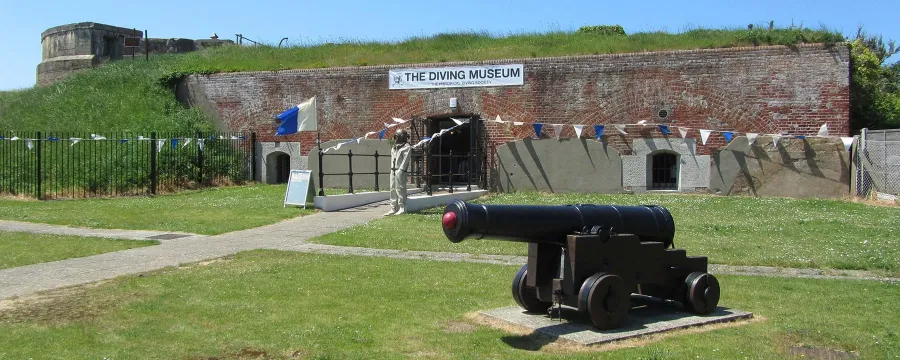
    To truly understand the phenomenon of the Diving Museum Gosport, one must look at the building that houses it. The museum’s premises are not just a neutral backdrop for the exhibits – they are actually one of the largest and most historically valuable artefacts in the entire collection. We are talking about the famous No. 2 Battery, located along the Stokes Bay Road promenade.

    Muzeum Nurkowania w Gosport Diving Museum Gosport

    This structure, boasting prestigious Grade II* listed building status, was built in 1861 as part of a gigantic Victorian system of fortifications ordered by Lord Palmerston. Fearing a French naval invasion, the British Empire constructed massive structures out of early reinforced concrete and brick here to protect the strategic Royal Navy dockyard in nearby Portsmouth. Armed initially with 7-ton, 7-inch rifled muzzle-loaders on innovative Moncrieff carriages, and later with modern breech-loading guns, the battery commanded absolute respect.

    Fascinatingly, this building underwent remarkable transformations in the 20th century, giving the Diving Museum Gosport its unique atmosphere. In 1933, the austere parade ground was converted into a civilian caravan park, only for the area to be requisitioned a decade later – during the Second World War – for the top-secret training of Duplex Drive (DD) amphibious tanks prior to the Normandy landings.

    Muzeum Nurkowania w Gosport Eksponaty na zewnątrz Diving Museum Gosport

    The most radical change, however, occurred during the Cold War. In 1982, the Victorian casemates were converted into a classified nuclear bunker and the Main Sub-Regional Headquarters for Civil Defence in the event of World War III. The gun ports were bricked up, and a Swiss air filtration system along with massive gas-tight blast doors were installed. Today, as you admire the exhibits, you are standing inside an archaic yet fascinating survival capsule designed for nuclear armageddon. From a military enthusiast’s perspective, this is undoubtedly one of the most compelling Hampshire attractions.

    The Pioneers of Gosport: How the Deane Brothers Changed the World

    Diving Museum Gosport

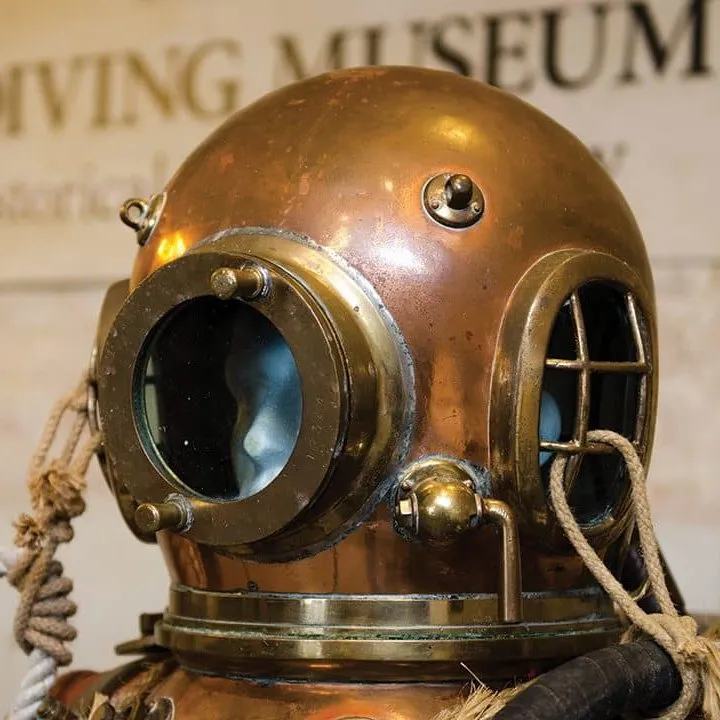
    The modern, industrial history of diving begins not in the water, but… in the thick smoke of burning buildings. In 1823, Charles Deane patented a Victorian “smoke helmet” for firefighters. Soon, however, Charles and his brother John Deane realised that this copper marvel, supported by rudimentary air-pumping engines, would allow a person to breathe deep underwater.

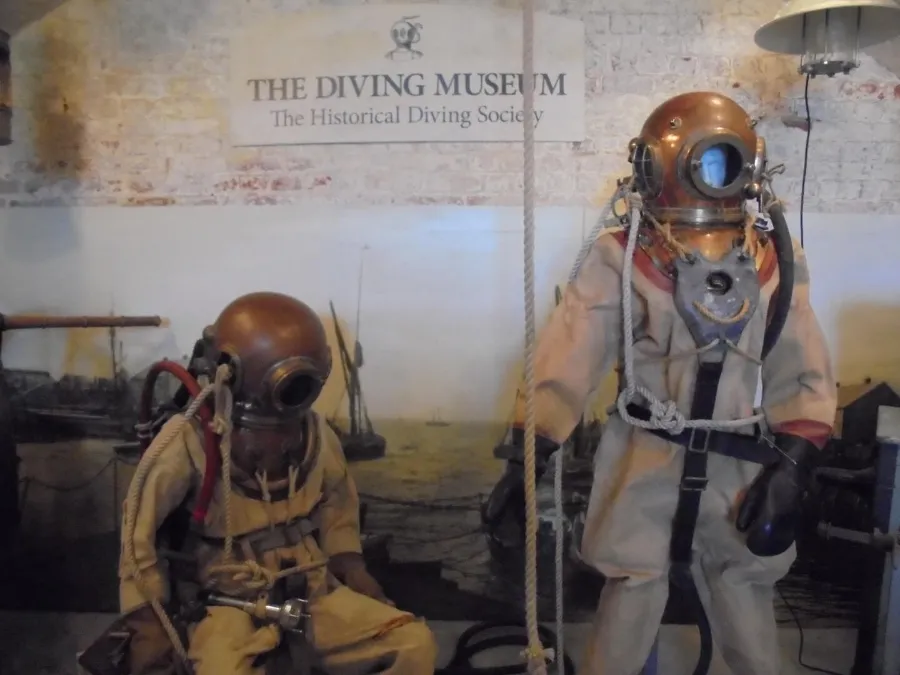
    The Deane brothers’ early inventions – “open” systems – were terrifyingly dangerous. If a diver simply tripped on the seabed, the life-giving air would escape from the bottom of the helmet, posing an immediate risk of drowning. Despite this, in 1829, the brothers conducted the first successful commercial operations off the coast of the Isle of Wight. Over time, collaborating with the brilliant engineer Augustus Siebe, they created a revolutionary “closed” system in 1837, where the helmet was sealed to a rubberised suit. This design defined the silhouette of a diver for the next 100 years!

    Muzeum Nurkowania w Gosport Skrzynia z wraku Diving Museum Gosport

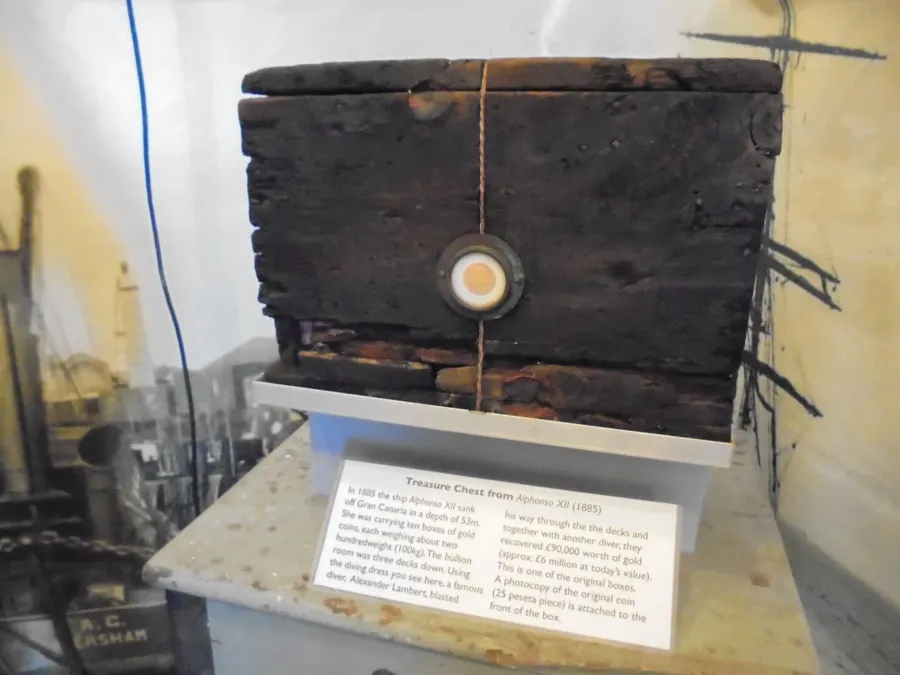
    Gosport permanently entered the history books thanks to John Deane, who successfully surveyed the wreck of HMS Royal George in 1834, recovering massive cannons from it. Two years later, the brothers made an epochal discovery, finding Henry VIII’s flagship – the famous Mary Rose. They operated out of Gosport, and local entrepreneur Henry Abbinett became the first person in the world to commercially purchase his own diving helmet. If the rich history of diving interests you, the Diving Museum Gosport is the place where you will see firsthand the tremendous cost at which this discipline was born.

    The Museum’s Collection: From the Holy Grail to James Bond’s Suits

    The exhibits displayed within the casemates of No. 2 Battery are considered some of the rarest and most complete in Europe. By visiting the Diving Museum Gosport, you will be guided through a brutal and heroic timeline of engineering.

    Diving Museum Gosport

    The undisputed “jewel in the crown” is the original, prototype Deane brothers’ helmet from 1828. Saved from the auction block, it has earned the legally protected status of a “national treasure.” Its crude appearance makes you realise the immense weight – reaching up to 75 kilograms – that the first explorers of the English Channel had to bear.

    Deep-Sea Revolution and Pop Culture Icons

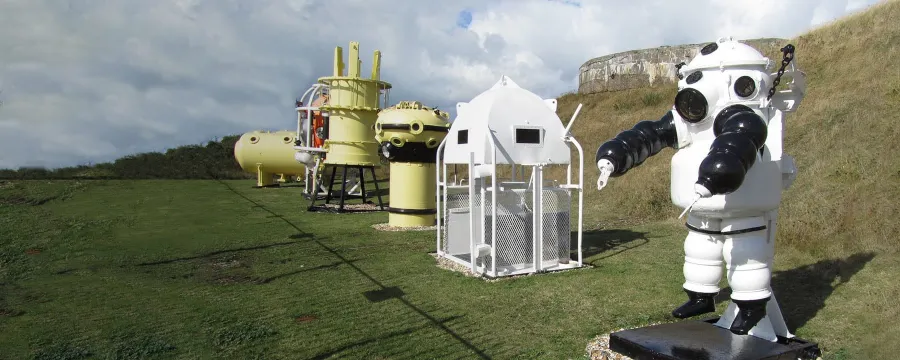
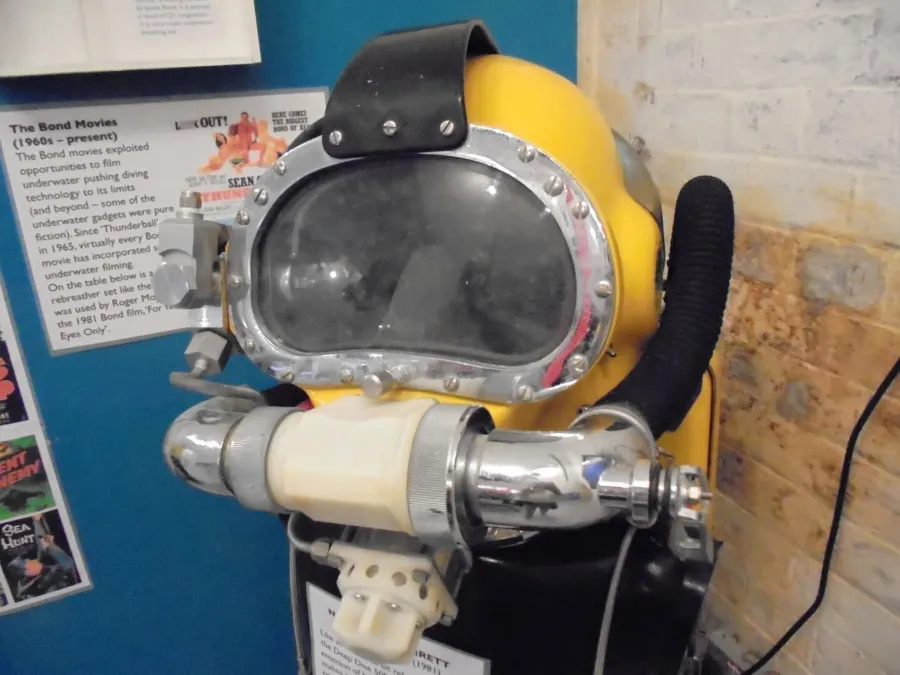
    Genuine awe and respect are inspired by the phenomenal collection of atmospheric diving suits (ADS). These are armoured, one-person, human-shaped submarines built from alloys resistant to monstrous pressure. They allowed operators to work on the seabed in a one-atmosphere environment – eliminating the risk of decompression sickness or deadly nitrogen narcosis.

    Among them stands out the iconic British “JIM” suit (model JIM 18), featuring fascinating rotary joints, on loan from the Royal Navy Submarine Museum. It gained massive popularity in mainstream pop culture, appearing in the famous James Bond film For Your Eyes Only (1981) as a tool for underwater combat. The presence of such iconic equipment attracts not only tech fans but also crowds of movie buffs looking for unusual trip inspirations and searching for unconventional Hampshire attractions.

    The Birth of Recreational Diving

    Diving Museum Gosport

    Another extensive section of the museum focuses on SCUBA gear, which freed humanity from heavy surface umbilicals. It is here that the history of diving intertwines with the fate of French naval officer Captain Jacques-Yves Cousteau, who, alongside engineer Émile Gagnan, created the first fully functional “Aqualung” in 1943. The museum proudly displays a classic tri-set apparatus, used on the legendary research vessel RV Calypso. What’s more, this apparatus has royal provenance – it was personally gifted by Cousteau to the Admiral of the Fleet, Lord Louis Mountbatten!

    The Cold War and Espionage: The Disappearance of Commander Crabb

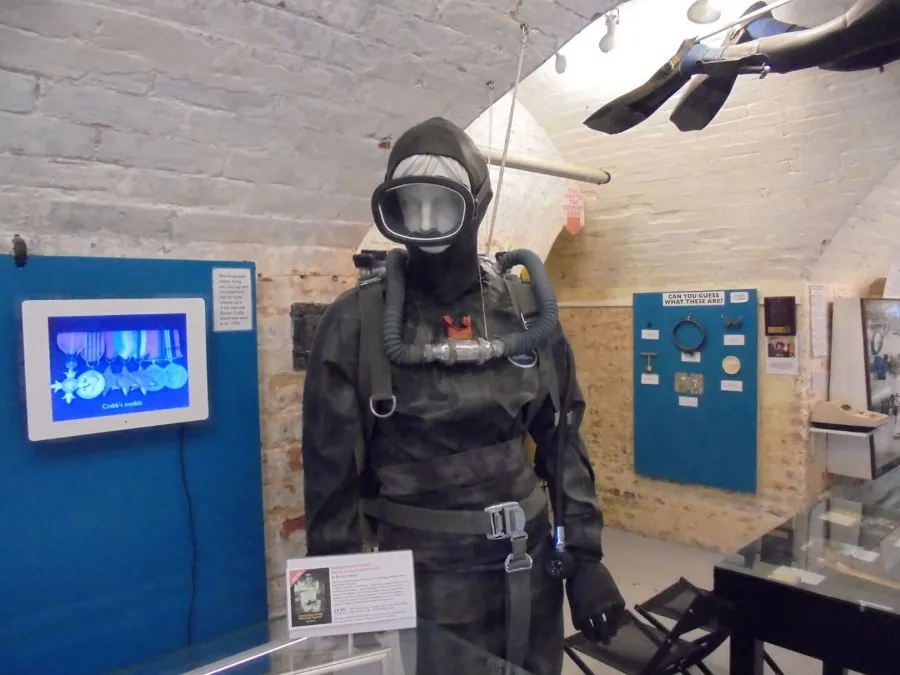
    The military wing offered to visitors of the Diving Museum Gosport presents the darker side of the ocean: diving for the purposes of sabotage, mine clearance, and silent reconnaissance. Here you will learn about the mechanics of military rebreathers and see terrifying, manned “human torpedoes” known as Chariots.

    Muzeum Nurkowania w Gosport Lionel Buster Crabb Diving Museum Gosport

    However, the greatest mystery exhibited within these cold walls is the unsolved 1956 case of Lionel “Buster” Crabb. This outstanding British diver, awarded the George Medal for disarming Italian mines during WWII, was secretly recruited by MI6 at the height of the Cold War. His objective was to inspect the keel of the state-of-the-art Soviet cruiser Sverdlov (“Ordzhonikidze”), which had arrived on a peaceful, propaganda mission in Portsmouth harbour with Nikita Khrushchev on board.

    On April 19, 1956, Crabb went into the water and vanished without a trace. This incident sparked a massive diplomatic scandal that shook the government of British Prime Minister Sir Anthony Eden. The Soviet Union accused the British of blatant espionage, and the Admiralty panicked and covered up the affair, tearing pages from hotel registers in Portsmouth and issuing absurd, fabricated statements about an “unfortunate test-dive accident.”

    Fourteen months later, a mutilated body missing its head and hands washed ashore near Chichester and was arbitrarily identified as Crabb’s remains – a decision that pathologists still object to today. Did he die of a heart attack in old gear? Was he murdered underwater by Soviet KGB snipers? Or perhaps – as rumours suggest – did he defect to the USSR? The full intelligence files will remain completely classified in national vaults until 2057. This fascinating story later inspired Ian Fleming to write the Bond novel Thunderball. Walking through the museum, you can see Crabb’s personal items: his knife, his dock worker’s cap, and watch recordings of his diving companion.

    An Ordinary Hero: William Walker

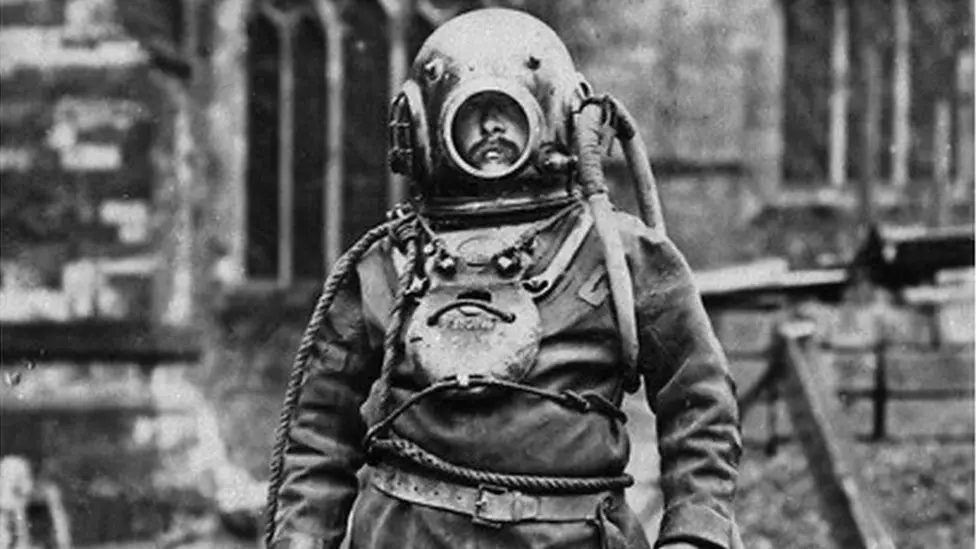
    The history of diving is not just about spies. During your tour, you will also learn about the fate of William Walker – a tough diver who attempted the impossible in 1906. The massive, 11th-century Winchester Cathedral had begun to dramatically sink into the boggy peat and was threatened with total collapse.

    William Walker Diving Museum Gosport

    For 6 long years, working alone in pitch blackness and freezing water beneath the crypt floors, Walker manually laid thousands of bags of hardening concrete. It is estimated that he laid tons of them, recreating a stable foundation for the cathedral. Walker didn’t fight with weapons – he fought with a pickaxe and a trowel, wearing heavy leaden gear. He saved one of the most beautiful historic buildings in Europe. It is a beautiful tribute to the British working class and early engineering.

    A Perfect Attraction for Everyone

    When planning your trip and searching through guidebooks for the best Hampshire attractions, remember that the Diving Museum Gosport is exceptionally family-friendly. At the very end of the heavy, technical exhibition, a treat awaits the youngest visitors: the Mannequin Man. It’s an interactive, fun zone where you can put on a highly realistic replica of a heavy Victorian helmet, take a souvenir photo, and personally feel the weight that giants of the deep like William Walker or the Deane brothers had to struggle with.

    While you are there, be sure to admire the giant diving bells and steel decompression chambers outside the entrance, set against the backdrop of the 1861 brick ramparts. After leaving the museum, we highly recommend a stroll along the wide Stokes Bay promenade with an excellent view of the Isle of Wight, followed by a relaxing coffee at the nearby Bayside Cabin.

    Don’t delay – add the Diving Museum Gosport to your itinerary. The depths and their mysteries are waiting just around the corner!

    Frequently Asked Questions (FAQ) – Diving Museum Gosport